
Important Notice:
Beware of Scams
Catholic Charities San Francisco (CCSF) does not charge fees over the phone or through online ads. If you are contacted by someone claiming to be Catholic Charities and asking for payment, it is a scam. Please call our office directly at (415) 972-1200 for more information or to request a consultation.
Important Notice: Beware of Scams
Catholic Charities San Francisco (CCSF) does not charge fees over the phone or through online ads. If you are contacted by someone claiming to be Catholic Charities and asking for payment, it is a scam. Please call our office directly at (415) 972-1200 for more information or to request a consultation.
(415) 972-1200
MARIN | SAN FRANCISCO | SAN MATEO
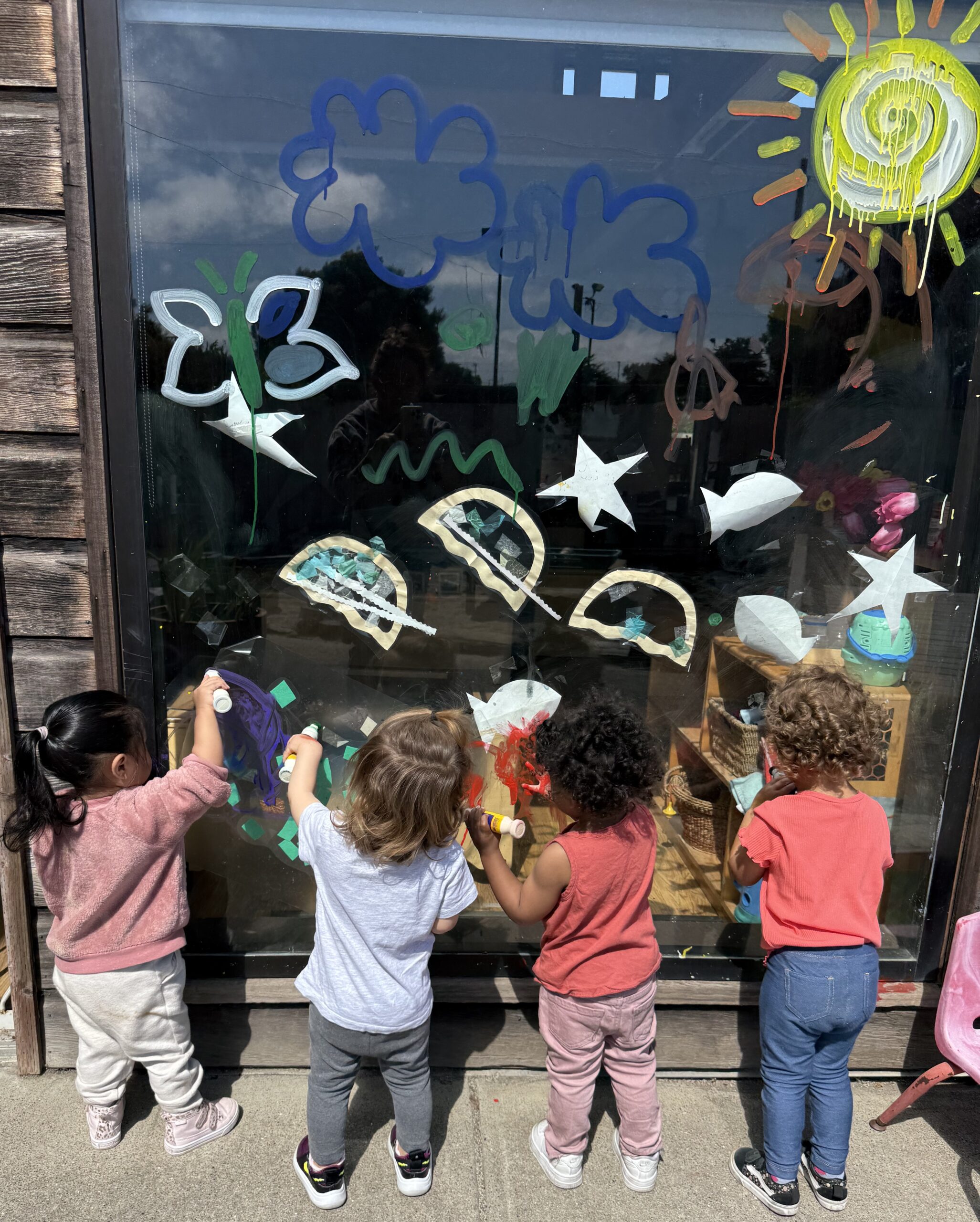
We are excited to announce open enrollment for our Infant, Toddler, and Preschool programs! Families are welcome to stop by for a tour, meet our caring educators, and pick up an application.
We proudly offer financial aid for all families who qualify.
For more information, please call 415-834-0614
or email Erica at ENave@CatholicCharitiesSF.org
We look forward to welcoming you and your child to our community!
Hablamos español / Мы говорим по-русски
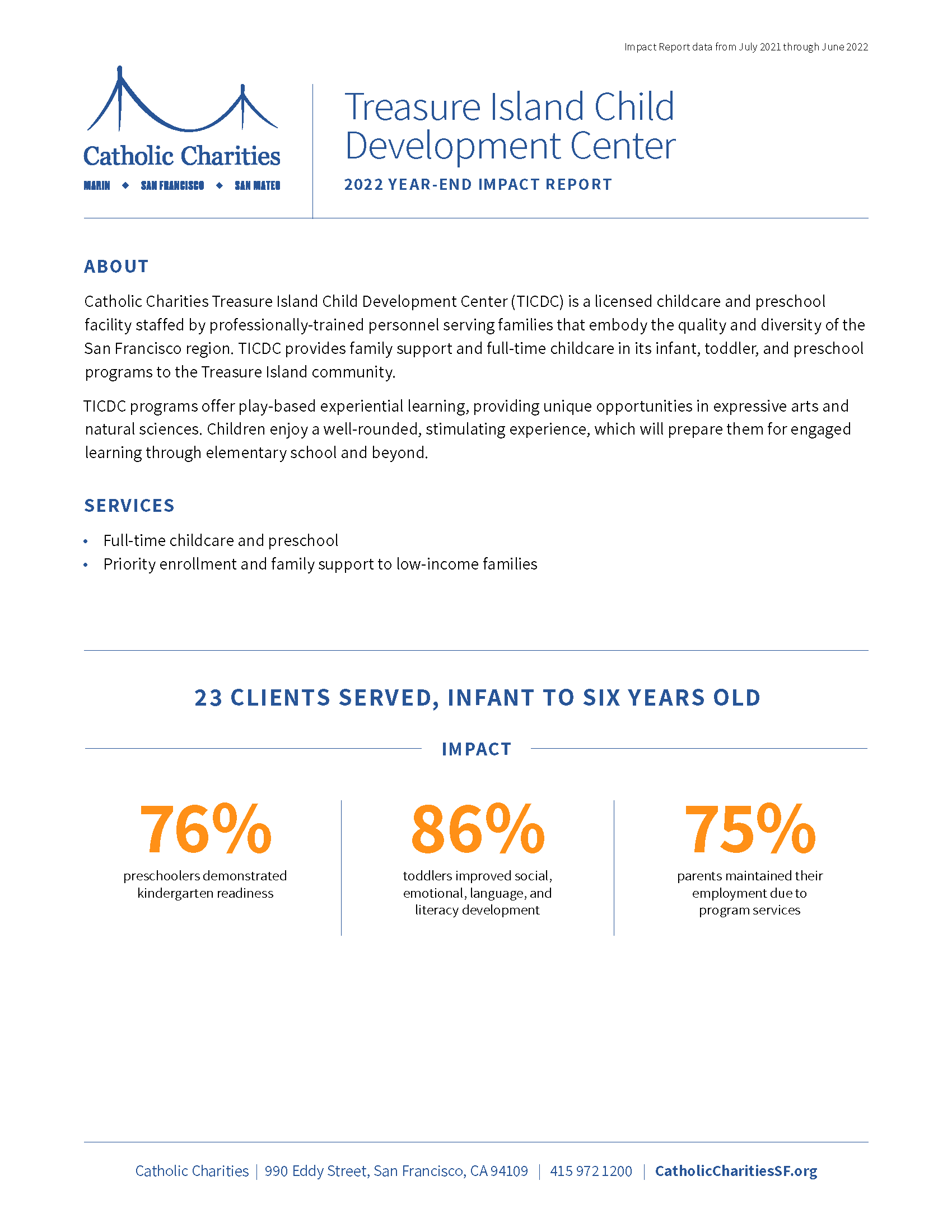
At Catholic Charities Treasure Island Child Development Center (TICDC) we strive to create a collaborative child-centered environment where everyone contributes and feels taken care of.
Parents and professional teaching staff work together to nurture each child’s capacity to love and learn. At the Center, children explore the complexities of their world through creative arts, social interaction, enhanced play and nature studies. Our goal is to provide the children in our care with a well-rounded stimulating experience, which will prepare them for engaged learning through elementary school and beyond.
The TICDC community is a reflection of the multi-cultural character of San Francisco. We encourage participation and champion individuality, celebrate differences, and work to foster an atmosphere of respect and caring.
The staff of this licensed Childcare and Preschool facility provides family support and full-time childcare and education for infants, toddlers, and preschoolers, not only living in the Treasure Island community but for anyone in the Bay Area.


The TICDC educational philosophy is “Creative Curriculum,” and is rooted in play-based experiential learning. We work to provide a conduit for natural, active curiosity and creativity. Our Arts enriched program is designed to inspire individuality, self-confidence, and an enthusiasm for discovery and learning. To foster compassion and empathy we take time to help children negotiate conflict and talk about their feelings. We model a warm communication style and emphasize mutual respect in our interactions with children and among adults. Classroom Teachers serve as facilitators in a dynamic environment created to challenge and stimulate each child’s emerging physical, emotional, social and cognitive growth. Teacher-led activities and thematic content are based on the children’s expressed interests. The diversity, talents, and expertise of staff members and parent volunteers also enrich each classroom’s curriculum.
Daily Schedule
A schedule of activities is posted in each classroom.
At TICDC a well-rounded, enjoyable experience includes:
Center for the Social-Emotional Foundation for Early Learners
The Center on the Social and Emotional Foundations for Early Learning (CSEFEL) is focused on promoting the social emotional development and school readiness of young children birth to age 5.
All Teachers and Center Staff are trained in implementing “The Teacher Pyramid.” As a Center we as staff, children and families agree to follow the following expectations for behavior:
These are posted in the classrooms instead of rules. Our philosophy is to educate the children about what they can do and not what they can’t do. Language is reframed to give the child positive expectations for behavior. For example, we will say “Use your walking feet,” instead of “do not run.”
Ages and Stages at Treasure Island Child Care Center
At Treasure Island Child Care Center (TICDC) we respect the unique process of each child’s development. By individualizing their journey through our program, we seek to enhance self-esteem and nurture inherent strengths while offering the appropriate level of challenge to inspire growth. To help in evaluating developmental progress we assess all children using the Desired Results Developmental Profile tool. This enables us to identify milestones met as well as those areas of development that are still emerging. All children are assessed after 60 days of enrollment followed by every 6 months. Parents also are required to complete an “Ages and Stages Questionnaires” (ASQ) upon the first 60 days of enrollment.
“Everywhere Babies” Infants – 3 months to about 18 months
In this classroom, each child eats, naps and plays based on their own internal clock. Child choice play and open exploration happen indoors and out. The developmental focus is on receptive language and gross motor ability i.e. Independent walking, climbing, pushing and pulling. “Everywhere Babies” are beginning to participate in teacher-led group activities. When a child is a confident walker, is able to nap on a cot, and has strong receptive language and burgeoning expressive language skills he or she may be ready for the toddler environment.
“Runaway Bunnies” Toddlers – about 18 months to 36 months
In this classroom, there is a daily schedule in place. Children are beginning to “use their words.” Fine motor manipulatives such as Duplo Blocks are a new and exciting choice activity. There are also plenty of opportunities for gross motor activities such as rocking, riding, climbing, and dancing. Here a child is able to combine words to express moods, desires, and dissatisfactions, is comfortable transitioning from routine activities and can successfully participate in teacher-lead activities. For older toddlers in this classroom, the focus is on expressive language and social – emotional skills. Children are also potty training. Children are practicing self-regulation and beginning to share with their classmates.
“Giving Trees” and “Rainbow Fish” Preschool Rooms – 36 months to TK/Kindergarten eligible
In this classroom bonding with peers is prevalent. Children practice problem-solving and negotiating conflict. They develop fine motor skills through teacher-initiated activities. Children navigate learning stations dedicated to math, science, dramatic play, art, and gross motor. Social-emotional, pre-literacy skills and dual language learning are a focus of the curriculum. Classroom children participate in activities based upon their expressed interests. To promote literacy children, dictate their poems and stories and illustrate their work. In preschool children choose their activities; play in small groups, and must clean up after themselves. Resolving conflicts, problem solving and working through hurt feelings is the ongoing challenge. Independence, self-awareness, self-regulation, empathy, cooperation, and creativity are important attributes for a rising Kindergartener. The CSEFEL model is a daily part of the planned curriculum.
Typically, a child is ready for our preschool classrooms when he or she can:
Center Hours: 8AM to 5PM
Address: 850 Avenue D
Catholic Charities Treasure Island Child Development Center is proud to be a collaborative Island partner with
Elizabeth is a teacher at TICDC
When Elizabeth’s daughter Alexa began attending Treasure Island Child Development Center, Elizabeth shared her dream of becoming a teacher with staff who set her up as a teacher’s aide while she completed her certification. When Elizabeth became pregnant with another child, TICDC staff came up with a plan that allowed her to teach the youngest age group so she could be with her new daughter while teaching.
“I think this is the most important thing that has happened in my life, to have this opportunity to work and have my child in the center. Being a single mom with two kids, pregnant, with no job, it was really hard for me…now I really want to thank Catholic Charities for the opportunity to have this job and support my family.”
Elizabeth is a teacher at TICDC
When Elizabeth’s daughter Alexa began attending Treasure Island Child Development Center, Elizabeth shared her dream of becoming a teacher with staff who set her up as a teacher’s aide while she completed her certification. When Elizabeth became pregnant with another child, TICDC staff came up with a plan that allowed her to teach the youngest age group so she could be with her new daughter while teaching.
“I think this is the most important thing that has happened in my life, to have this opportunity to work and have my child in the center. Being a single mom with two kids, pregnant, with no job, it was really hard for me…now I really want to thank Catholic Charities for the opportunity to have this job and support my family.”
Gil’s son attends TICDC
Gil’s son attends TICDC
Being a single father, Gil says he did not know what to do to help his speech-delayed son and had no one to watch his son so that he could go out to work. After connecting with Catholic Charities, he says his life and that of his little one have completely changed for the better. Antonio, age four, spends approximately eight hours a day at Catholic Charities Child Development Center located on Treasure Island in the city of San Francisco. The amazing staff at Catholic Charities Treasure Island Child Development Center has helped Antonio so he can express himself more fluently.

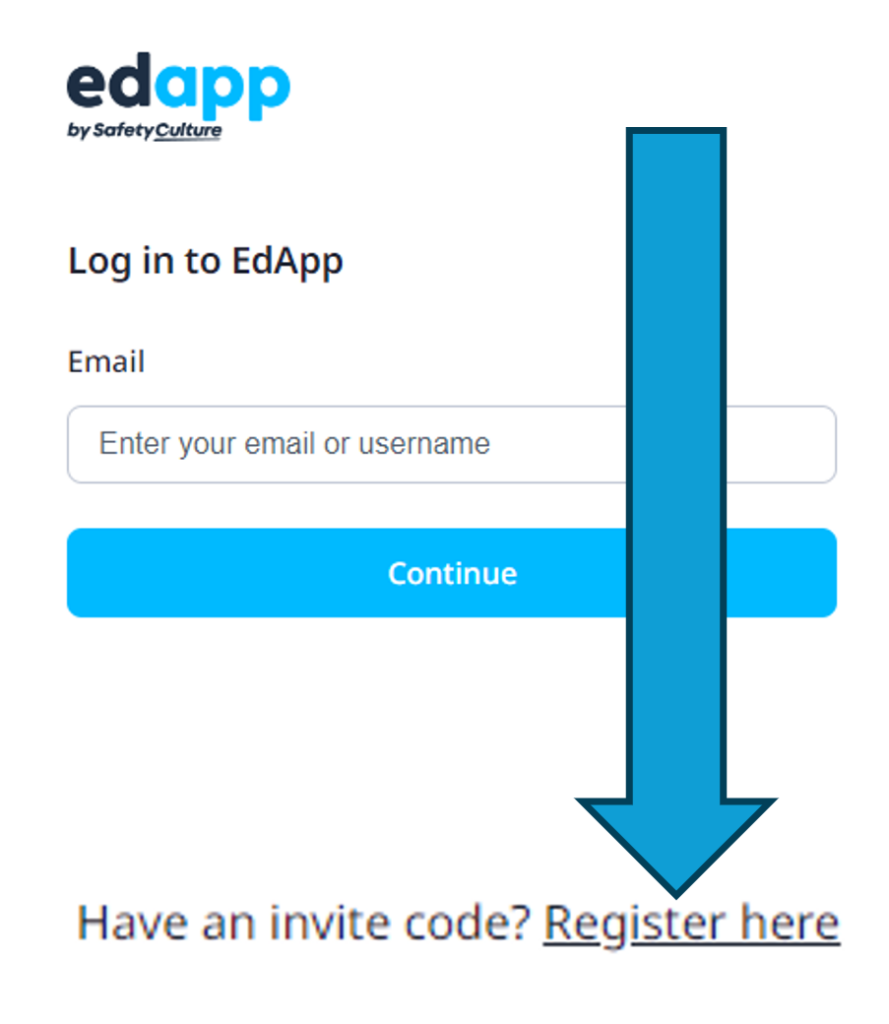
To access the free course:
Review our volunteer opportunities, please contact us for newly added opportunities.
Set up an account by completing our basic application.
Contact Darlene Wilson, Volunteer Manager at Volunteer@CatholicCharitiesSF.org or call 415-972-1371
Review our volunteer opportunities, please contact us for newly added opportunities.
Set up an account by completing our basic application.
Contact Darlene Wilson at Volunteer@CatholicCharitiesSF.org or call 415-972-1371
Check our website for some opportunities, please contact us for newly added opportunities.
Set up an account by completing our basic application.
Contact Darlene Wilson, Volunteer Manager at Volunteer@CatholicCharitiesSF.org or call 415-972-1371
Check our website for some opportunities, please contact us for newly added opportunities.
Set up an account by completing our basic application.
Contact Darlene Wilson at Volunteer@CatholicCharitiesSF.org or call 415-972-1371
Charitable lead trusts share trust income with a charity over a period of years. Donors fund a charitable lead trust by transferring cash or other assets to their trust. The trust will then make payments to charity on a fixed schedule for a term of years, such as the life of one or more individuals. When the trust term expires, the remaining trust assets are transferred to non-charitable beneficiaries – usually going back to the donor or family members. Charitable lead trusts may produce tax deductions for donors and may reduce estate and gift taxes to heirs.
Naming Catholic Charities as a beneficiary of your retirement account can be an easy way to make a legacy gift and reduce taxes to your loved ones.
If you leave your retirement plan to your children, they will have to pay income tax on its distribution. Catholic Charities does not pay this tax, so 100% of your gift will be used to support its mission. Here’s an example of what this can mean to your heirs:
A widower died and left his $300,000 house to charity and his $300,000 retirement plan to his relatives. He should have done just the opposite. The relatives had to pay income tax on the $300,000 in the retirement plan, an $80,000 cost to them. If they had received the home, and the charity had received the retirement plan payment, no one would have paid income tax.
To make a gift of retirement plan assets, simply ask your plan administrator for a beneficiary designation form and name Catholic Charities as a primary or contingent beneficiary of your retirement account.
Impact of CARES Act on fundraising and nonprofits
How the CARES Act impacts donors and charitable giving in 2020
Universal charitable deduction for donors who do not itemize
Donors who do not itemize can deduct cash gifts to public charities of up to $300 per taxpayer or $600 per married couple.
Cash gifts include those made by check, credit card, electronic funds transfer, or payroll deduction.
Increase in AGI limit for donors who itemize
Donors who itemize can deduct cash gifts to public charities of up to 100% of their adjusted gross income (AGI). While this
deduction is reduced by other itemized deductions, any unused deduction can be carried over for up to five additional years.
Increase in limit on cash contributions from corporations
Corporations can give up to 25% of taxable income in 2020 for cash gifts to public charities. While other charitable
contributions reduce this limit dollar-for-dollar, cash contributions more than the 25% limit can be carried over for
up to five additional years.
Suspension of Required Minimum Distributions (RMD)
The CARES Act suspends RMD for 2020 from IRAs, 401(k)s, 403(b)s and other defined benefit pension plans. This change
helps retirees who would have had to take larger-than-expected distributions or face penalties.
IRA “Rollover” gifts allow donors, 70 ½ or older, to use IRA assets to make charitable gifts. IRA Rollover gifts are immediate distributions from a donor’s IRA account made directly to charity – that count toward a donor’s required minimum distribution or RMD. By reducing taxable income, IRA Rollover gifts can lower a donor’s tax bill and may help donors avoid Medicare high-income surcharges. And, as IRA Rollover gifts pass tax-free to qualified public charities, 100% of your gift to Catholic Charities can be used to help our brothers and sisters in the Bay Area.
To make the process of giving from your IRA easy, we have an online resource that allows you to give from your IRA to Catholic Charities. Or, if you would prefer to complete the gift offline, you can download the forms you need. This resource works with all major IRA custodians. Give from your IRA today.
As retirement assets are taxed differently, IRA’s left to loved ones can actually become a tax liability. Leaving some or all of your IRA to a good cause, like Catholic Charities, and other, less tax-vulnerable assets to family or friends can reduce this liability for your loved ones. Simply ask your plan administrator for a beneficiary designation form and include Catholic Charities to receive a specific percentage of your account or as a contingent beneficiary.
When you donate appreciated stock, bonds or mutual funds you’ve owned for more than a year, you’ll receive a tax deduction for the fair market value and avoid capital gains tax. Your deduction may provide you with additional tax savings if you itemize.
If you use appreciated stock to fund a charitable gift annuity or charitable trust, you won’t owe capital gains tax when those assets are sold – and you’ll receive an immediate tax deduction – while creating a stream of income for yourself and/or your loved ones.
Charitable gift annuities provide donors with guaranteed fixed payments for life and an immediate income tax deduction while allowing them to make a significant gift to a good cause they care about.
Gift annuities are easy to establish and can be funded with a minimum gift of cash or stock of $20,000. The annuity rate is based on your age. Typically, you must be at least 60 when payments begin. Gift annuities can provide lifetime payments to one or two people.
Gift Annuity Example: Mary Richards, age 75, funds a $25,000 charitable gift annuity contract to benefit Catholic Charities. Her annuity rate is 6.2%, giving her annual payments of $1550 for her lifetime. Mary also receives a tax deduction she can use if she itemizes. And Catholic Charities will receive much-needed financial support to continue to serve vulnerable communities in the Bay Area.
Here’s how a charitable trust works in 3 steps:
Step 1: Donors make irrevocable transfers of assets to their trust
Step 2: The trust begins to pay income and provide tax benefits
Step 3: When the trust ends, what remains in the trust account goes to charity
With charitable trusts, donors can convert assets into lifetime income while saving on taxes. And they’ll have the satisfaction of providing significant support to good causes like Catholic Charities.
Assets used to fund charitable trusts (cash, stock, or real estate) are sold and invested to pay income to one or more income beneficiaries for life or a term of years. Your trust can also pay income to your heirs for life or for a term of years.
Owners funding charitable trusts with appreciated assets like stock or real estate bypass the capital gains tax they would have owed had they sold these assets outright. If the assets are highly appreciated, this benefit of charitable trusts can be significant.
And, as assets used to fund charitable trusts are no longer part of the donor’s estate, charitable trusts can reduce or eliminate estate tax. When the trust expires, the remainder is distributed to one or more good causes named by the donor.
The most common legacy gift people make to support the work of Catholic Charities is a gift in their will or living trust, also known as a charitable bequest. There is no need to write a check now and your assets remain entirely under your control during your lifetime. To make a charitable bequest, consider adding language like this to your will or living trust:
I give { ___ percent of my estate, OR description of asset, OR _____ dollars } to Catholic Charities, a California nonprofit corporation, 1555 39th Avenue Francisco, CA 94122 (Tax ID: 94-1498472), for (check one) ☐ its general use OR ☐ for the following restricted purpose: ___________________________________________________________________________ . (If you wish to restrict your gift, please contact us to ensure Catholic Charities can fulfill your wishes.) Thank you for supporting our mission with your legacy gift!
If you are ready to include a gift to Catholic Charities of San Francisco in your will or trust today, use our free, online resource. We’ve partnered with FreeWill to give all of our supporters the ability to create their plans online in only 20 minutes.
Prefer to finalize your plans with an attorney? FreeWill can also be used to create a set of documented wishes to bring to the lawyer’s office, saving you time and money on attorney fees. Get started on your plans.
Some assets, like life insurance policies, IRA’s, 401k’s, bank and brokerage accounts, and donor-advised funds can be easily given to charity – once you no longer need them – by designation.
Life insurance: You may have a life insurance policy you purchased years ago and no longer need. You can name Catholic Charities as a full, partial or contingent beneficiary of your policy. You can also sign over a fully paid policy and receive a tax deduction for your gift.
IRA, 401k’s and other retirement plan assets: As retirement plans are taxed differently than other assets, they can become a tax liability when inherited. Designating Catholic Charities as a beneficiary of these assets can reduce or eliminate this liability. You can include Catholic Charities on the beneficiary designation form to receive a specific percentage of your account or as a contingent beneficiary.
Bank & brokerage accounts: Assets like certificates of deposit, savings bonds, bank and brokerage accounts can become wonderful charitable gifts – once you no longer need them. Simply name Catholic Charities as the pay-on-death (POD) or transfer-on-death (TOD) beneficiary.
Donor-advised funds: Final distribution of DAF’s is controlled by beneficiary designation. You can easily name Catholic Charities as the successor of your DAF account – or a portion of the account value – leaving the balance in your DAF to allow children and grandchildren to continue your philanthropy.
We are grateful for your donation and support of our organization. If you have made an error in making your donation or change your mind about contributing to our organization please contact us. Refunds are returned using the original method of payment. If you made your donation by credit card, your refund will be credited to that same credit card.
Ongoing support is important to enabling projects to continue their work, so we encourage donors to continue to contribute to projects over time. But if you must cancel your recurring donation, please notify us.