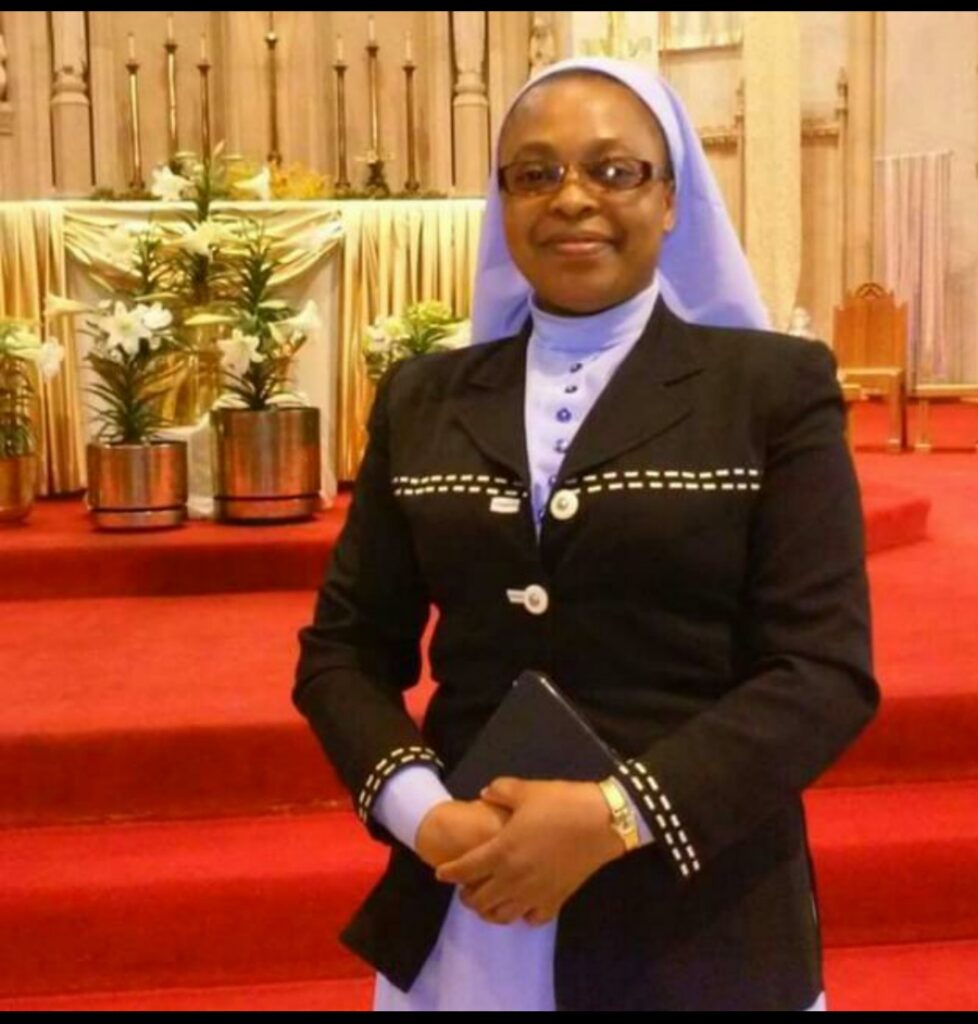
We had the incredible opportunity to ask our colleague Sister Carol Ijeoma Njoku some questions about her work at the Center for Immigration and Legal Support Services (CILSS).
Sister Carol is a Catholic Nun of the Congregation of the Daughters of Mary Mother of Mercy, as well as a Postdoctoral Fellow and DOJ-Accredited Representative at Catholic Charities San Francisco. Sister Carol truly embodies the Catholic spirit of service, and we are so grateful for her joyous presence, and her commitment to walking with the most vulnerable.
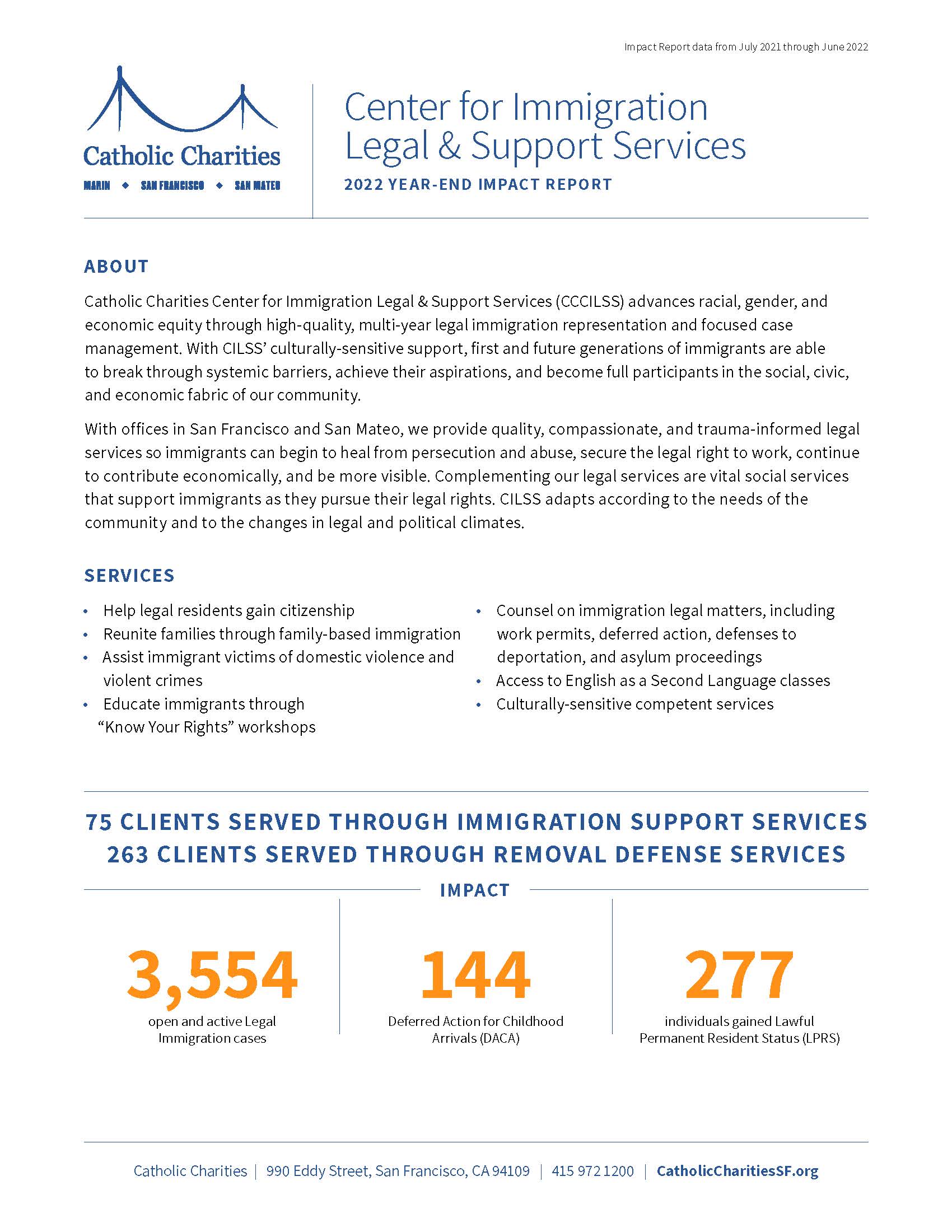
Check out our interview with Sister Carol below and learn more about the Center for Immigration Legal & Support Services here.
Can you talk a little about yourself, and what made you want to do this work?
I am Sister Carol Ijeoma Njoku, a Catholic Nun of the Congregation of the Daughters of Mary Mother of Mercy, and a Postdoctoral Fellow currently serving as a DOJ-Accredited Representative with Catholic Charities Immigration and Legal Support Services (CILSS). I am profoundly inspired by the life-saving mission of Catholic Charities, which closely aligns with both my religious vocation and my legal career. Through this work, I am able to serve the most vulnerable members of our communities—thousands of whom face compelling and urgent immigration needs—and to accompany them with compassion, dignity, and skilled legal advocacy.
Can you talk about the kind of work that CILSS does?
We deliver life-changing immigration legal services that protect dignity, restore hope, and strengthen families and communities. Our work reunites families and creates lawful pathways through family-based petitions, adjustment of status, consular processing, waivers, and naturalization. We fiercely advocate for survivors of crime and persecution—securing protection through U and T visas, Violence Against Women Act (VAWA) relief, asylum, and special humanitarian programs. For those facing deportation, we provide critical courtroom advocacy, including bond hearings, asylum claims, cancellation of removal, and Freedom of Information Act (FOIA) requests to safeguard due process. Beyond legal representation, we empower immigrants through “Know Your Rights” education, ESL access, vocational training, and holistic support that enables long-term stability and self-sufficiency.
What does the experience working at CCSF mean to you?
Grounded in international human rights law and doctoral training in immigration, and refugee policy, my work translates academic expertise into practical, client-centered advocacy. At CCSF and with CCILSS, I provide comprehensive support across affirmative and defensive cases, including family petitions, drafting briefs, declarations, motions, country conditions, and preparing clients for hearings. Accompanying clients who have fled persecution, human rights abuse, or domestic violence has been profoundly impactful, as many are re-traumatized by the constant fear of removal while seeking humanitarian relief. My greatest fulfillment comes from guiding clients through complex legal pathways with compassion, alongside a dedicated team and the outstanding leadership of Luis Rosario Rodriguez and Dr. Remigius Chibueze.
Any new and exciting initiatives or projects in your programs you would like to mention?
In response to the current climate within the immigration system, our program has expanded its consultation services, “Know Your Rights” programs and launched Rapid Response support for immigrants within our reach. We remain committed to standing with clients during periods of profound uncertainty and disruption in immigration policy and enforcement. Recently, in a long-pending case of nearly seven years, the presiding Immigration Judge was fired just two days before a scheduled hearing, after all filings had been completed and the client fully prepared. This sudden development required swift legal recalibration amid an already volatile system. At the same time, we provided sustained emotional and psychological support to help the client navigate trauma while adapting to rapidly changing immigration realities.
Can you talk about any clients or experiences that had an impact on you?
One of my most profound experiences has been supporting VAWA clients and survivors of severe abuse seeking safety and stability for themselves and their children. One client fled to the U.S. at sixteen after surviving rape and witnessing her mother’s violent attack, later facing deportation and years of marital abuse and trauma before we could help her pursue a VAWA petition and work authorization; she now lives safely with her children and is exploring nursing school program. In another critical case, a woman driven to suicidal ideation by her abuser had her adjustment of status jeopardized when he withdrew his petition, and we successfully intervened to file a VAWA petition on her behalf to enable her to continue with her adjustment. These cases require patience, empathy, and trauma-informed advocacy to help the clients tell their stories and reclaim agency over their lives. Supporting both women to regain safety, dignity, and hope in the United States has been among the most fulfilling aspects of my work and research.
What’s something that happened at work recently that made you smile or find meaning?
A recent moment that brought me joy was our team’s Christmas gathering, complete with a gift exchange and laughter that strengthened our bonds of friendship. This celebration reflected the same spirit we bring to our work—supporting clients facing profound challenges. Our teamwork and generosity began at Thanksgiving, when we organized food and clothing drives to support our clients. Sharing these experiences and seeing the impact of our efforts reminded me of the deep meaning and purpose in the work we do.
Can you talk about the idea of hope? What does hope mean to you, and how would you say that CILSS offers hope to your clients?
Hope is a divine grace anchored in God, inspiring a steadfast belief in possibility even in the face of daunting circumstances. It is the unwavering conviction that a better, safer future remains within reach. Such trust allows individuals to keep moving forward, even when facing unimaginable challenges, fear, or trauma. At CILSS, we build hope in our clients and through our work uniquely transform hope into tangible action. Whether it’s reuniting families, securing humanitarian relief through VAWA, U, or T visas, guiding clients through complex deportation proceedings, or helping them access education and vocational opportunities, our work provides concrete pathways for clients to reclaim safety, dignity, and self-determination. By combining legal expertise with compassion, patience, and holistic support, CILSS gives clients the reassurance that they are not alone—and that even in the most difficult circumstances, there is a future they can build for themselves and their families.
What do you wish more people knew about the people CILSS serves?
The people CILSS serves are remarkably resilient, having faced unimaginable challenges yet continuing to persevere. They demonstrate immense courage, often confronting trauma, abuse, or displacement while seeking safety and stability for themselves and their families. Above all, they carry hope—a belief in a better future that inspires both their journey and the work we do to support them.
Anything else that you would like to add about your experience working at Catholic Charities?
I have had an incredible experience working at Catholic Charities San Francisco, where I am fortunate to collaborate with some of the most compassionate, committed, results-oriented, and friendly teammates. Every day, I am inspired by the dedication of my colleagues and the tangible impact we make on the lives of our clients, which makes this work both meaningful and deeply rewarding.
What should someone do if they want to learn more about your program?
Those wishing to learn more about our program, they can visit the Catholic Charities San Francisco CILSS website to explore our services and resources. They can also contact our office directly to speak with a team member, attend one of our “Know Your Rights” workshops, or participate in community events where we share information and provide guidance. Following us on social media is another way to stay updated on our programs, initiatives, and the impact we have in supporting immigrants and their families.